












North America - Forecast Models |
 |
 |
| Model | NAM | RUC | GFS | |||
|---|---|---|---|---|---|---|
| Model Fields | Forecast Hour | Animation Options | Forecast Hour | Animation Options | Forecast Hour | Animation Options |
| MSLP, 1000-500mb Thickness, & Precipitation |
JAVA | GIF JAVA JavaScript | GIF JAVA JavaScript | |||
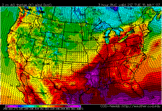
| 2M Temperature, 2M Relative Humidity, & 10M Wind |
GIF JAVA JavaScript | GIF JAVA JavaScript | GIF JAVA JavaScript | |||
| 850mb Temperature, RH & Wind Flags |
GIF JAVA JavaScript | GIF JAVA JavaScript | GIF JAVA JavaScript | |||
| 700mb Vertical Velocity, Winds & Total Cloud Cover |
JAVA | GIF JAVA JavaScript | GIF JAVA JavaScript | |||
| 500mb Heights, Winds & Vorticity |
JAVA | GIF JAVA JavaScript | GIF JAVA JavaScript | |||
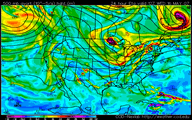
| 200mb Heights, Isotachs & Wind |
JAVA | GIF JAVA JavaScript | GIF JAVA JavaScript | |||
| Convective Available Potential Energy (CAPE) |
GIF JAVA JavaScript | GIF JAVA JavaScript | GIF JAVA JavaScript | |||
| Standard Lifted Index | GIF JAVA JavaScript | GIF JAVA JavaScript | GIF JAVA JavaScript | |||
| Snow, Rain, Ice Pellets, & Freezing Rain |
GIF JAVA JavaScript | GIF JAVA JavaScript | N/A | |||
| Total Cloud Cover | GIF JAVA JavaScript | N/A | GIF JAVA JavaScript | |||
| Model Fields | Forecast Hour | Animation Options | Forecast Hour | Animation Options | Forecast Hour | Animation Options |
| Model | NAM | RUC | GFS | |||
Forecast models Courtesy of NOAA ARL using data from the National Center for Environmental Prediction (NCEP).


